Wildpeace.
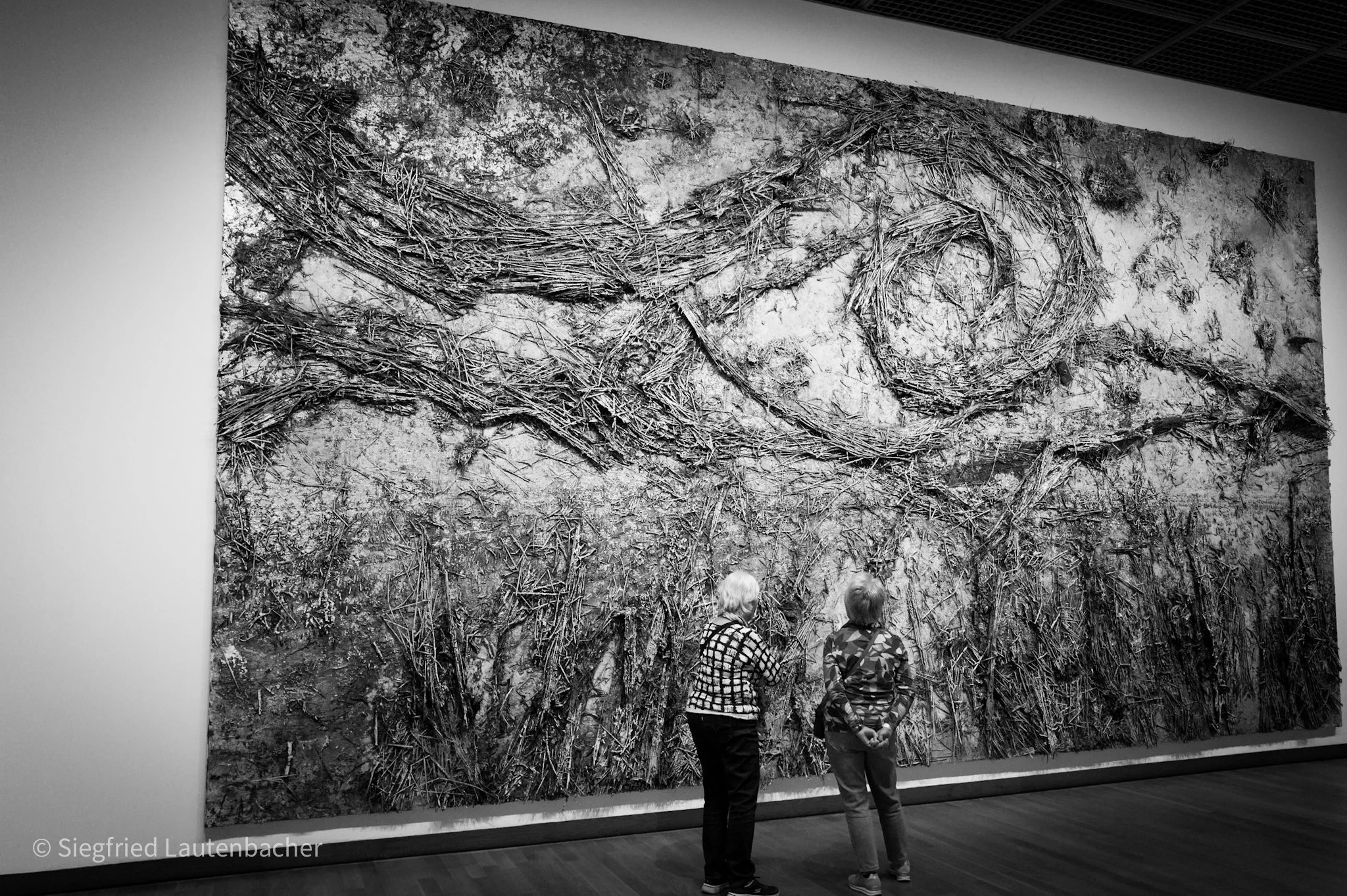
Anselm Kiefer, Die Sternennacht (The Starry Night), 2019. Stedelijk Museum Amsterdam. Photo: Siegfried Lautenbacher
Pope Leo XIV did something unusual in his Christmas message: he quoted a Jewish poet from the loggia of St. Peter's. Jehuda Amichai, born 1924 in Würzburg as Ludwig Pfeuffer, emigrated to Palestine in 1936, changed his name in 1946 to “Amichai”—”My people lives.” Despite the Holocaust, as Gustav Seibt notes in the Süddeutsche Zeitung. A name that is defiance, not illusion.
The poem is called “Wildpeace.”
Not the peace of a cease-fire,
not even the vision of the wolf and the lamb,
but rather
as in the heart when the excitement is over
and you can talk only about a great weariness.
I know that I know how to kill,
that makes me an adult.
And my son plays with a toy gun that knows
how to open and close its eyes and say Mama.
A peace
without the big noise of beating swords into ploughshares,
without words, without
the thud of the heavy rubber stamp: let it be
light, floating, like lazy white foam.
A little rest for the wounds—
who speaks of healing?
(And the howl of the orphans is passed from one generation
to the next, as in a relay race:
the baton never falls.)Let it come
like wildflowers,
suddenly, because the field
must have it: wildpeace.
Yehuda Amichai, “Wildpeace” from The Poetry of Yehuda Amichai (Farrar, Straus and Giroux, 2015). Translated by Chana Bloch & Stephen Mitchell Copyright © Hana Sokolov-Amichai. https://www.poetryfoundation.org/poems/54294/wildpeace
Leo quoted the opening and closing lines, omitting the darker middle passages—the knowledge of killing, the toy gun, the howl of orphans passed on like a baton. The Vatican's selection softens; the full poem doesn't.
What kind of peace is this?
Seibt got it right: this peace doesn't come from negotiations, not from prophecy, “not even from the noise of beating swords into ploughshares.” It comes from the exhausted heart.
But it's not resignation. Read closely: “A little rest for the wounds—who speaks of healing?” Amichai doesn't promise healing. He's not that naive. The howl of the orphans continues, passed on like a baton in a relay race. The baton never falls.
And yet: let it come. Because the field must have it.
This is not optimism. It's something harder to name. A refusal to stop hoping, not because the situation looks good, but because the field needs what it needs.
Making peace vs. letting peace come
Alfred Adler spoke of “Gemeinschaftsgefühl”—community feeling, social interest—as a fundamental human capacity. Not an ideal we strive toward, but something that's already there when we stop working against it.
Amichai's wildpeace works similarly: it's not manufactured. It grows, “suddenly, because the field must have it.” Not because someone had a plan, but because exhaustion ends the fighting.
This isn't passivity. It's the recognition that some things cannot be made, only enabled. A distinction that makes a practical difference.
The peace Amichai describes is “light, floating, like lazy white foam.” Joseph Vogl, in his recent book on suspension and hovering, writes about states that are neither grounded nor falling—in-between conditions that have their own reality. Wildpeace might be one of them: not the solid ground of a peace treaty, not the free fall of continued war, but something suspended, floating, precarious and real.
Receiving and responding
Leo quotes Augustine in his message: “God, who created us without our doing, cannot save us without our doing.”
We receive life—but what we receive remains ineffective without our response. Not pure passivity, not pure activity. Both at once.
And then this sentence: “to put oneself in the position of those who suffer.” This sounds like empathy rhetoric, but Leo connects it with responsibility. Response-ability—the capacity to respond. This capacity only emerges when I let myself be moved.
In Adlerian terms: encouragement isn't cheerleading. It's the recognition that someone has what it takes. And that recognition only becomes real when I've actually moved toward the other person, let their situation affect me. Not from a safe distance.
The gesture
That a Pope quotes a Jewish poet in a Christmas message addressing the wars of our time—that says more than any diplomatic formula.
Amichai changed his name in 1946. My people lives.
I don't know if this is hope. Maybe it's closer to what Amichai describes: not healing, just a little rest for the wounds. Not the vision of wolf and lamb, just wildflowers growing because the field needs them.
The baton never falls. And still: let it come.
Gustav Seibt's article in the Süddeutsche Zeitung put me on this trail.
The Christmas message in full: vatican.va